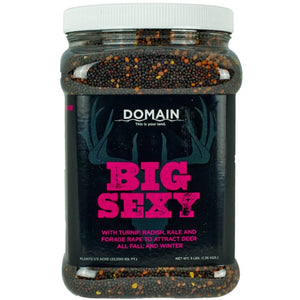
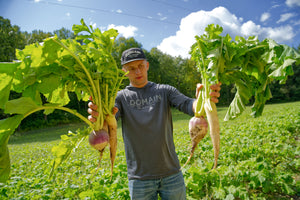
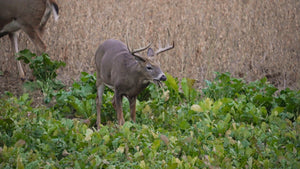
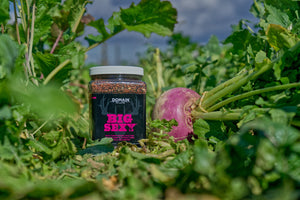
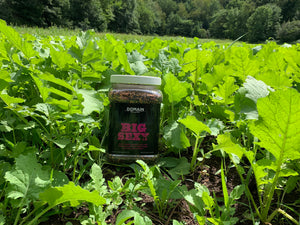
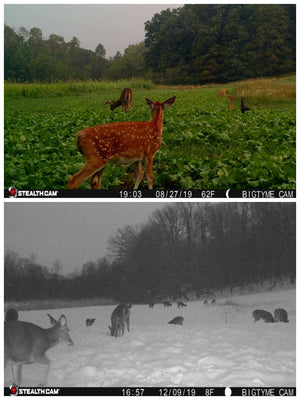
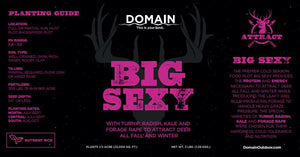
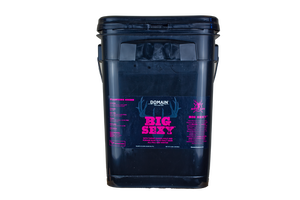

Big Sexy Food Plot Seed by Domain Outdoor is a brassica food plot seed for deer built for land managers, deer hunters, and habitat builders who want a clear answer for what to plant, when to plant it, and how to make it perform.
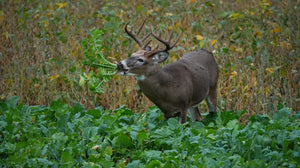
This product is best used for late season deer attraction, small kill plots, and fall/winter energy. It includes turnip, radish, forage rape, and kale and fits a complete property plan that connects seed choice, planting timing, fertility, and dealer support.
late season deer attraction, small kill plots, and fall/winter energy
North: July–September
Central: July–September
South: August–October
For weather-based timing by ZIP code, use the Domain Planting Date App.
Big Sexy Food Plot Seed is best used for late season deer attraction, small kill plots, and fall/winter energy.
Normal planting guidance is: North: July–September; Central: July–September; South: August–October. For a weather-based recommendation, use the Domain Planting Date App.
Recommended pairings include Crank’d, Freight Train, Elbow Grease, and Dirty Deeds. Use the Plot Enhancing Liquids App to adjust the program by acreage, crop type, soil pH, phosphorus, and potassium.